
奇怪  从经过的每一座桥上跳下去
@[email protected]
从经过的每一座桥上跳下去
@[email protected]


很难,在床上扭动卷曲了一早上醒醒睡睡到底为何如此“疲惫”
此“疲惫”到底是不是真的疲惫??
还是昨晚做梦太多?
但关键问题上这旁不太想做饭,朕头昏!朕起不来!
奇怪 从经过的每一座桥上跳下去
boosted
从经过的每一座桥上跳下去
boosted

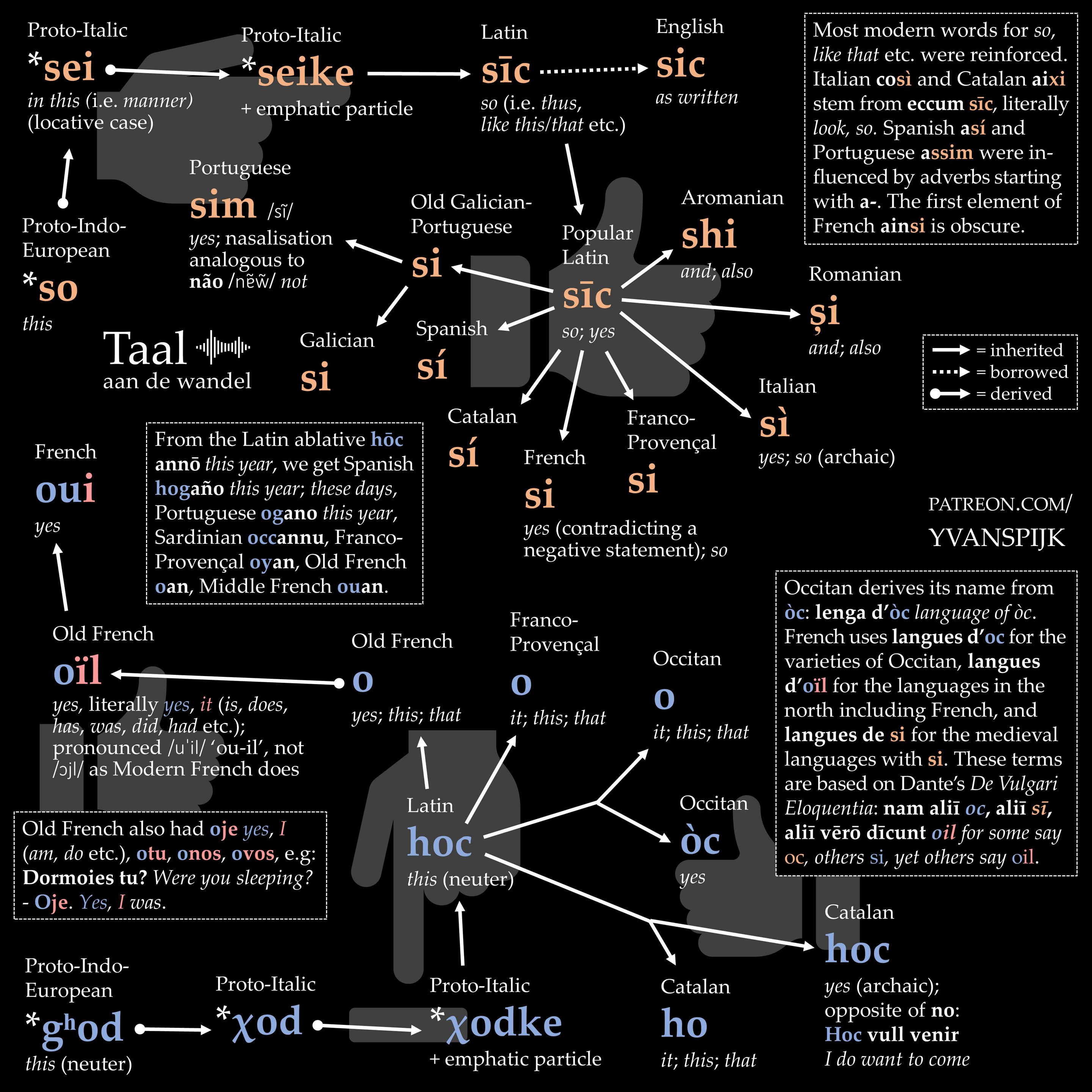
Italian 'sì', Spanish 'sí' and many more Romance words for "yes" come from Latin 'sīc', which meant "so; thus; like that". In Popular Latin it got an extra meaning: "yes", born out of the sense "like that", i.e. "like you said".
French 'oui' has a completely different origin. It comes from Old French 'oïl', a univerbation of 'o il', literally "yes, it (is/does/has etc.)".
'O' stemmed from Latin 'hoc' (this), which became 'òc' (yes) in Occitan, whose name was derived from this very word.
最近老点赞动物视频,我小红书变成动物世界了现在,今天还看到了水獭毛片!太色了!
下楼买个番茄,警察也一大早的贴单子
梦见有人给我写情书,说一直喜欢我,但是要出国了,希望我去某间餐厅看看,里头有挂她的画
我就去了,画很一般,餐厅老板挺不满意的,说米其林来了看到这个画决定要扣分
……完球😩这不会是平行宇宙的哪个笨蛋我干的事儿吧?!?!?
没错,以后在简历上要写:超爱洗碗抹桌子,热爱整理房间和衣柜,有需要的话还能做1!
木瓜太熟了,切了三分一嚼嚼嚼,太熟了,抱吃了,软绵绵的甜甜的,还是硬点的喜欢,带点苦也行嗯!
李康生演警察?!没想到!真想看!!
糟糕了,现在看到陈以文脑子里就会自动播那个旋律

哈哈!叔叔阿姨去玩儿去了,周末不在家,我是霸王我是霸王我是霸王!但是朕!还得自己做饭啊干!!
疯辽
好想叫全宇宙都来听我读课文!天呐!我学累了!!!!!!!!!!!!!
我疯了!!!!
我念一篇课文要28+36+42+23=129秒!!!!
哎呀门前宝地要演了!
哎呀主演是向佐卧了个痘!
易烊千玺和舒淇演……情……侣?吗?
uffa!我怎么还不会开挖掘机!!!
奇怪 从经过的每一座桥上跳下去
boosted
从经过的每一座桥上跳下去
boosted

天気が良いから、飛行機に乗りたい!
隔壁部门小兄弟来找我咨询点事儿
我:?你用香水??
他:没有没有!中午洗头了!
我也想买上海花里麻糟公交卡(
疯了,学了宾语代词这个句子语序完全混乱了!
这到底什么意思:我们(被)陪伴回家一些朋友
主语是一些朋友?所以主语放在最后吗?所以陪伴是第三人称复数变位?